Devotional history, changing sacred geography, independent Gaudiya institutions and living heritage in Bengal
Mayapur’s religious significance is inseparable from Shri Chaitanya Mahaprabhu and the wider sacred region of Navadvipa. This account follows four connected histories: the historical and devotional landscape, Chaitanya’s remembered life, nineteenth-century arguments about the appearance site, and the development of independent modern missions. It distinguishes sacred testimony from independently evaluated historical and geographical claims.
History of Mayapur: Sacred Geography and Historical Context
Mayapur stands in West Bengal’s Nadia district, close to the contemporary Bhagirathi–Jalangi river landscape. For pilgrims, its significance is inseparable from the sacred Navadvipa region associated with Shri Chaitanya Mahaprabhu.
For historians, it is also a place where waterways, settlements, devotional memory and modern institutions have shaped one another over time.
These names require care. Mayapur is a present-day locality; Nabadwip is a distinct modern settlement; historic Navadvipa names an earlier centre of learning and devotional history; and Navadvipa-mandala denotes a wider sacred geography traditionally described as nine islands. The devotional map is meaningful within Gaudiya pilgrimage, but cannot be treated as a cadastral reconstruction of Bengal in 1486.
The Bhagirathi river system has changed its channels and banks. Geographical studies discuss erosion, sedimentation and changing courses, which complicate efforts to place historical descriptions onto a present-day map. Those studies do not establish precisely where a river flowed during Shri Chaitanya Mahaprabhu’s appearance.
What Is Mayapur Famous For?
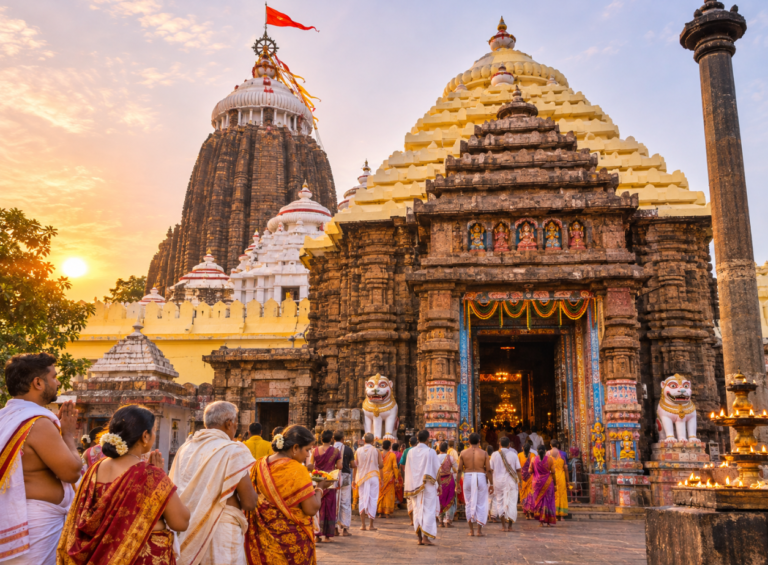
Mayapur is revered by many Gaudiya Vaisnavas as the sacred appearance place of Shri Chaitanya Mahaprabhu. It is known for nama-sankirtana (congregational chanting of the holy names), Gaura Purnima, Navadvipa-mandala parikrama and the activities of several independent Gaudiya institutions, including ISKCON. The precise modern geographical identification of the historical birthplace remains debated.
To understand this significance, one must consider more than a single shrine or modern organisation: the story extends from the religious and intellectual culture of Navadvipa to nineteenth-century sacred-geographical inquiry and the continuing work of independent institutions and local communities.
Shri Chaitanya Mahaprabhu and Historic Navadvipa
Gaudiya devotional biographies place Shri Chaitanya Mahaprabhu’s appearance in Navadvipa in 1407 Saka, commonly rendered 1486 CE, on Phalguna Purnima. Caitanya-caritamrta, Adi-lila 13.89, supplies the traditional year and full-moon setting; related accounts associate the event with a lunar eclipse. This is a devotional chronology, not a modern civil birth registration, and no precise Gregorian day is asserted here.
These biographies name Jagannatha Mishra and Shachi Devi as his parents and remember the child as Nimai. They situate his youth amid an intellectual culture of Sanskrit learning, logic and debate for which Navadvipa became known. His later religious leadership gave distinctive prominence to Krishna-bhakti and congregational chanting, or sankirtana.
Devotional Biography and Gaudiya Theology
Texts such as Vrndavana Dasa’s Caitanya-bhagavata and Krishnadasa Kaviraja’s Caitanya-caritamrta are indispensable witnesses to Gaudiya literary memory and theology. They were composed after the events they narrate. Their status as devotional texts does not diminish their religious authority for practitioners, but neither makes them contemporaneous civil or archaeological documentation of every place named.
In Gaudiya Vaisnava siddhanta, Shri Chaitanya Mahaprabhu is revered as Shri Krishna appearing with the devotional mood and complexion of Shrimati Radharani. Caitanya-caritamrta, Adi-lila 4.55, expresses this theological understanding through the union of Radha and Krishna in Chaitanya. The Bengali verse, its modern English translation and later explanatory purports are distinct interpretive layers. This doctrinal formulation is attributed specifically to Gaudiya Vaisnavism, not to every Vaisnava sampradaya.
In this tradition, the chanting of divine names and pilgrimage to the dhama are acts of devotion, not merely cultural performances. Their meaning arises from lived practice, scriptural interpretation and relationships of spiritual instruction, none of which the WVA claims to regulate.
Mayapur Yogapitha and the Birthplace Identification Debate
Early Gaudiya devotional biographies associate Shri Chaitanya Mahaprabhu’s appearance with Navadvipa in Bengal. Influential Gaudiya traditions identify the Yogapitha at present-day Mayapur as the sacred appearance site. The precise historical correspondence between the present site and the earlier geographical setting, however, has been examined and disputed in historical scholarship. These debates concern location and evidence; they do not adjudicate the sanctity of a tradition’s worship.
Different kinds of evidence must be kept apart. Early devotional biography preserves the Navadvipa setting; later sacred-topographical literature develops the geography of the dhama; Bhaktivinoda Thakura made a documented printed case for the Mayapur identification in the nineteenth century; and modern scholars have examined historical maps, settlement history and alternative identifications. None of these layers alone supplies an independently verified contemporary land survey of the appearance site.
Narahari Cakravarti’s Bhakti-ratnakara, particularly its twelfth taranga, has been cited in discussions of Mayapur’s sacred geography. The available English references differ in numbering the relevant passage. Until Bengali textual witnesses have been collated, this article deliberately supplies no definitive verse number or direct quotation.
Varuni Bhatia’s 2017 chapter, “Utopia and a Birthplace,” is relevant to the religious and intellectual context of the nineteenth-century identification; this assessment relies on publisher abstract and metadata rather than an inspected full chapter. In separate studies published in 2023 and 2026, Balai Chandra Das examines devotional, historical and geographical evidence, arguing for further scrutiny of the precise location. His conclusions are scholarly interpretations and should not be presented as a universal historical verdict.
Bhaktivinoda Thakura’s Historical and Devotional Investigations
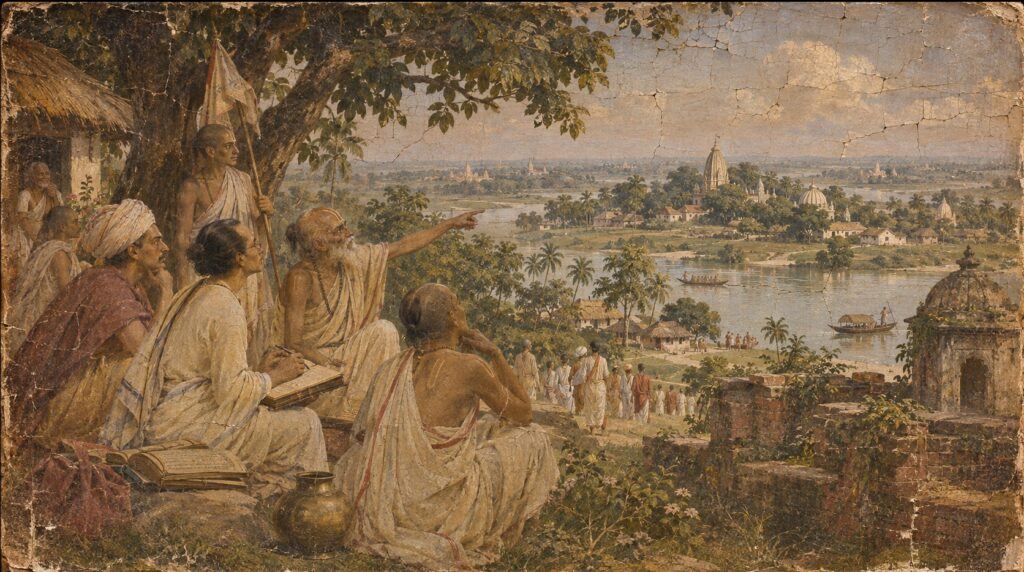
The nineteenth-century reformer and writer Bhaktivinoda Thakura (1838–1914) helped bring renewed attention to the sacred geography of Navadvipa. In “Sridhama Mayapura,” first published in Sajjana Tosani, volume 5, number 12, in 1893, he advanced a devotional and textual argument identifying Mayapur and encouraging pilgrimage. The version accessible for this article is a later English translation, not a direct collation of the original Bengali journal pages.
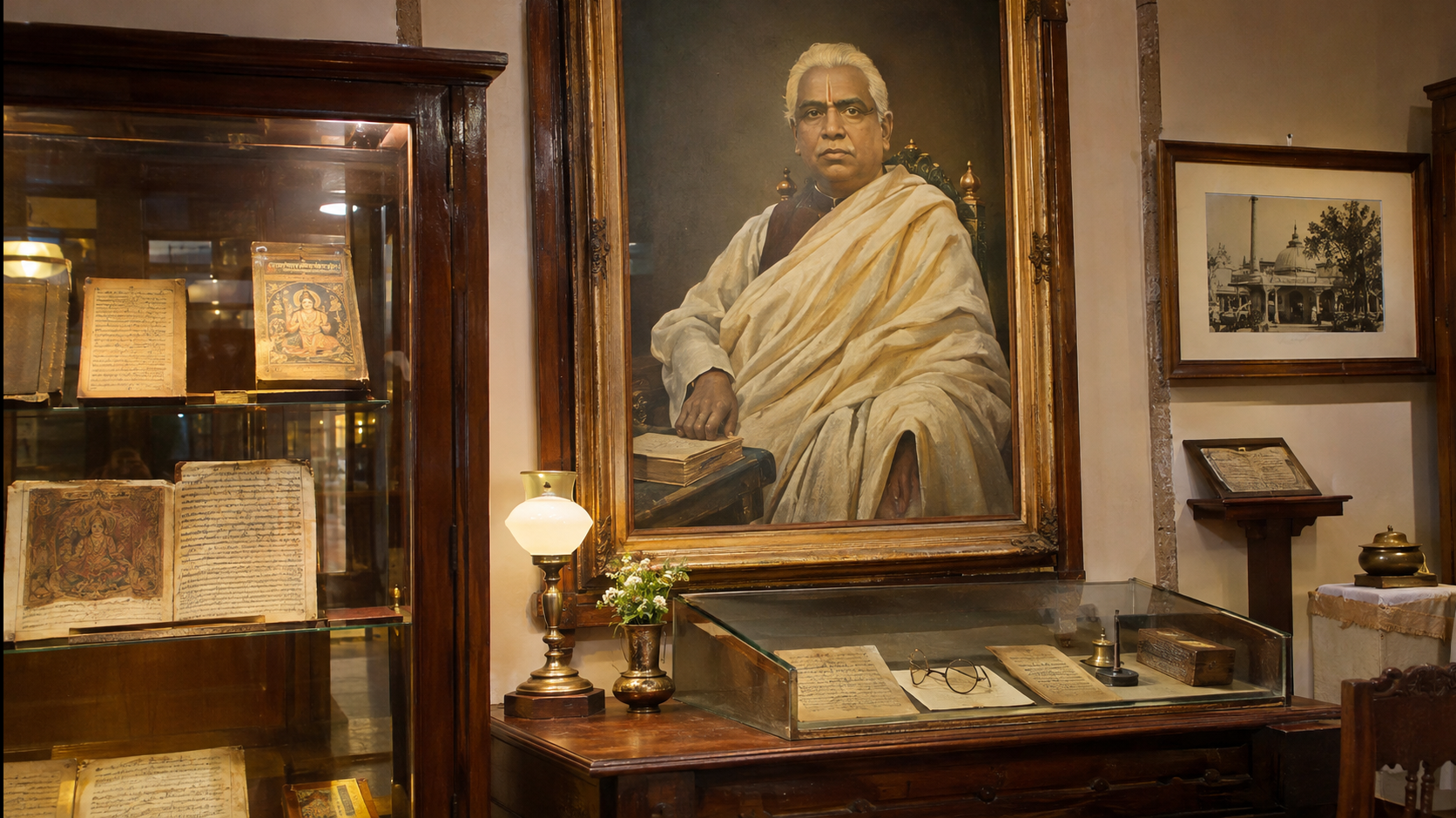
The significance of this publication is clear without claiming that an archaeological survey settled the matter: it documents what Bhaktivinoda publicly argued and how a modern devotional identification was communicated. Later scholarly discussions, including Bhatia’s chapter and Das’s studies, interpret that history from different perspectives. To call the site simply “rediscovered and proven” would collapse the distinction between religious conviction, nineteenth-century advocacy and independent historical verification.
Bhaktisiddhanta Sarasvati Thakura Prabhupada and Shri Chaitanya Math
Bhaktisiddhanta Sarasvati Thakura Prabhupada (1874–1937) developed influential forms of Gaudiya education, publication and organised devotional service. According to Gaudiya Mission’s own published chronology, Shri Chaitanya Math was established at Mayapur in 1918 under his leadership. That date is attributed to the institutional history; it is not presented here as an independently examined founding deed.
The Mayapur centre became part of a wider modern Gaudiya history. Subsequent missions developed different organisational identities, leadership arrangements and legal histories. Shared spiritual heritage does not mean that they are all branches of one present-day corporation or that one institution speaks for another.
Gaudiya Math and Independent Mission Histories
A balanced account of Mayapur must allow independent institutions to appear in their own right. Shri Chaitanya Math has its historical association with Mayapur. Sri Chaitanya Saraswat Math, by contrast, identifies its establishment in 1941 at Nabadwip, within the broader sacred region rather than the Mayapur locality itself. That historical claim derives from the institution’s published declaration and does not constitute independent validation of its current administrative details.
Institutional histories can intersect in pilgrimage and devotion while remaining distinct in governance and theological emphasis. Mentioning Gaudiya Math organisations, Sri Chaitanya Saraswat Math or ISKCON here implies neither formal WVA membership nor endorsement, partnership or authority to represent them. Any current affiliation would require separate documentary verification and appropriate institutional consent.
ISKCON and Mayapur’s International Development
A. C. Bhaktivedanta Swami Prabhupada founded the International Society for Krishna Consciousness (ISKCON) in New York in 1966, according to its institutional history. During the 1970s, ISKCON developed Mayapur as an international centre for devotion, education and pilgrimage. Its Sri Mayapur Chandrodaya Mandir is a prominent modern landmark, but ISKCON is not a synonym for the entire Mayapur–Navadvipa religious landscape.

The Temple of the Vedic Planetarium is an ISKCON-associated development project at Mayapur. In a project announcement dated 24 March 2026, organisers proposed an opening programme beginning in November 2027, with activities extending into 2028. This was a forward-looking schedule at the time of the announcement, not proof that the opening has occurred or a guarantee that the dates will remain unchanged. Updated project information must be checked before publication.
Pilgrimage, Kirtan and Gaura Purnima
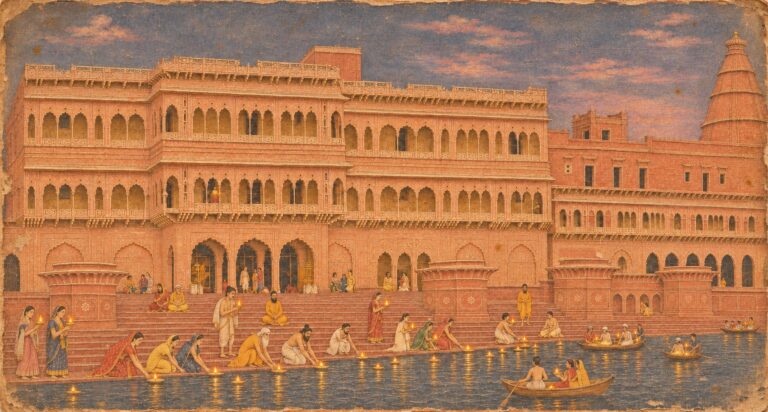
The rhythm of Mayapur’s devotional life includes Gaura Purnima, the observance of Shri Chaitanya Mahaprabhu’s appearance, and Navadvipa-mandala parikrama, in which pilgrims visit places remembered in sacred literature. Nama-sankirtana, worship, scriptural discussion and hospitality bring these traditions into public and domestic life. Institutions may publish their own calendars and practices; one programme should not be mistaken for a schedule governing every community.
Visitors can learn much by approaching these observances with attentiveness to local customs and the directions of the particular institutions they visit. This historical feature gives no guarantee of access to ceremonies, restricted places or photography, and does not announce any event on behalf of the WVA.
Living Sacred Heritage and Local Communities
The heritage of Mayapur is sustained not only by buildings and archives but by residents, devotional households, temples, teaching lineages, music, ritual knowledge and ongoing service. Preserving it responsibly requires respect for those who live and serve there. An outside writer cannot presume to describe their preferences, legal rights or priorities without appropriate evidence and consent.
A government online listing identifies a development project at Prabhupada Ghat as under construction. Because that list is undated, it does not establish the project’s current completion, effects on local livelihoods or environmental outcomes. Nor is it evidence that WVA administers or finances a Mayapur preservation programme.
This is an independent educational article of the World Vaisnava Association. It does not speak for local residents, temples, custodial communities or any of the independent missions described. It does not claim custodial or administrative authority over Mayapur sites, announce a WVA conservation or pilgrimage project, or imply permission to enter restricted areas. Any future collaborative undertaking would require consent and separately authorised human decisions.
The Continuing Significance of Mayapur
Mayapur’s story is compelling precisely because it cannot be reduced to a single institutional history or a dispute over one point on a modern map. It holds together a sacred appearance tradition, the intellectual world of Navadvipa, devotional literature, nineteenth-century inquiry and the independent institutions through which Gaudiya devotion has reached new generations.
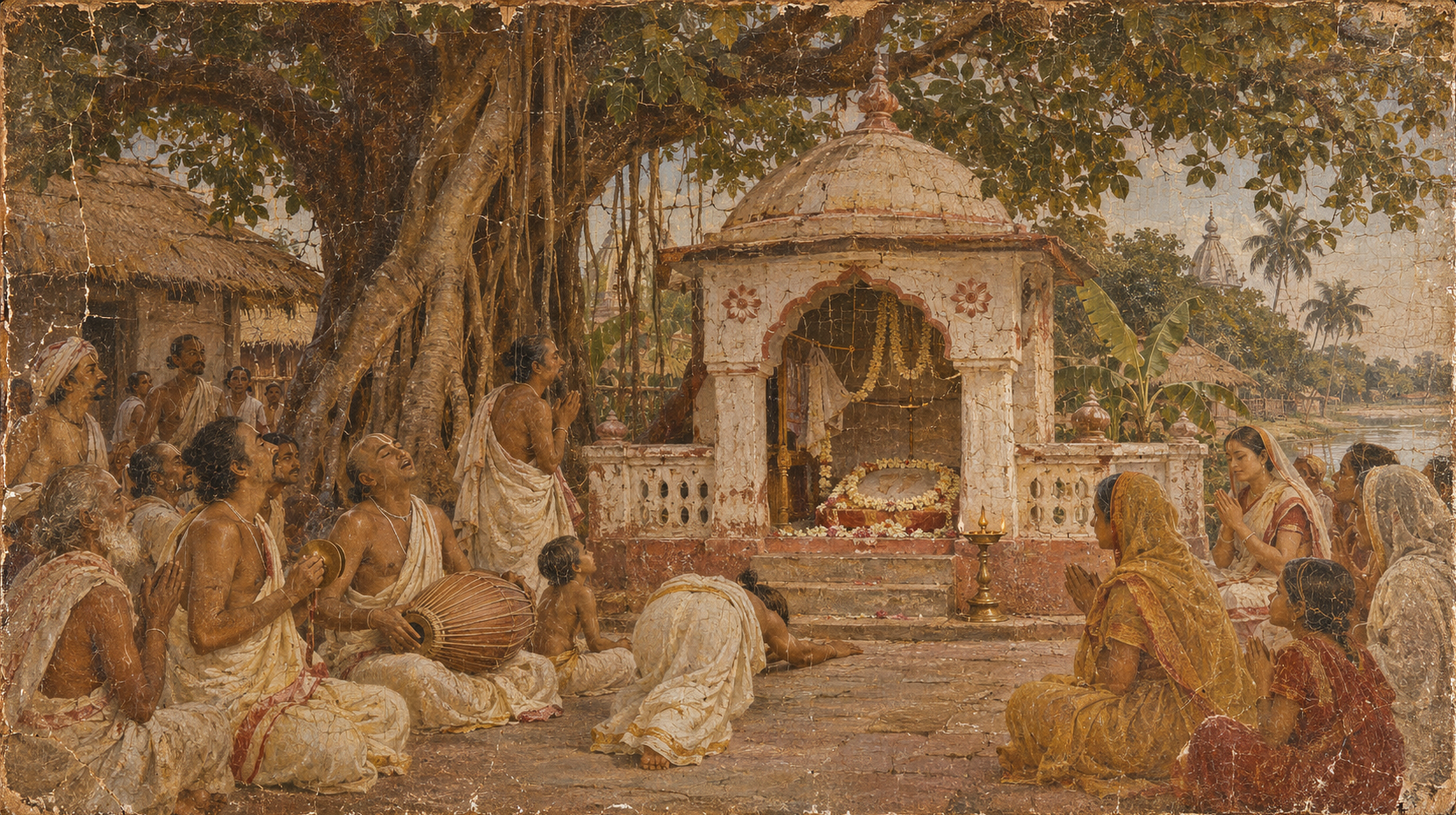
For the pilgrim, its meaning begins with devotion. For the historian, responsible study requires careful distinctions among texts, geography and institutional records. For those concerned with living heritage, it calls for respect toward local communities and the autonomy of the missions that serve the sacred landscape. These approaches need not be identical in order to meet in a spirit of informed respect.
Frequently Asked Questions About Mayapur
What is Mayapur famous for?
Mayapur is revered by many Gaudiya Vaisnavas as a sacred appearance place of Shri Chaitanya Mahaprabhu. The Mayapur–Navadvipa region is known for nama-sankirtana, Gaura Purnima, Navadvipa-mandala parikrama and independent Gaudiya institutions, including ISKCON. The precise modern identification of the historical birthplace remains debated.
Where is Mayapur?
Mayapur is in Nadia district, West Bengal, India, near the Bhagirathi–Jalangi river landscape. It belongs to the wider sacred geography of Navadvipa. Modern Nabadwip and the Mayapur locality are distinct places; the historical river courses were not necessarily the same as those seen today.
Was Chaitanya Mahaprabhu born in Mayapur?
According to Gaudiya devotional biographies, Shri Chaitanya Mahaprabhu appeared in the historical Navadvipa region, traditionally dated to 1486 CE. Influential Gaudiya traditions revere Mayapur Yogapitha as that sacred appearance site, while historians continue to debate the precise correspondence between the present location and the earlier geography.
What is the difference between Mayapur and Navadvipa?
Navadvipa may refer to the historical centre of religious learning and, in Gaudiya sacred geography, the broader Navadvipa-mandala pilgrimage landscape. Mayapur is a particular locality within that wider devotional region. Present-day Nabadwip is a separate modern settlement, and the river system has changed over time.
Who helped establish modern Mayapur pilgrimage?
Bhaktivinoda Thakura advanced a documented nineteenth-century devotional identification of Mayapur, including in an 1893 publication. Bhaktisiddhanta Sarasvati Thakura Prabhupada and later independent Gaudiya institutions contributed to the growth of modern pilgrimage and devotional activity. Their histories and current administration must be distinguished.
Is Mayapur only an ISKCON pilgrimage centre?
No. ISKCON maintains a prominent international presence at Mayapur, but the wider Mayapur–Navadvipa region includes Shri Chaitanya Math, other independent Gaudiya institutions, local communities and older pilgrimage traditions. Their inclusion here does not imply WVA membership, endorsement or common governance.
What is the story of Mayapur?
Mayapur’s story centres on the sacred Navadvipa region of Bengal, where Gaudiya Vaisnava tradition places Shri Chaitanya Mahaprabhu’s appearance in 1486 and celebrates his teaching of congregational chanting. In the nineteenth century, Bhaktivinoda Thakura promoted present-day Mayapur Yogapitha as the sacred appearance site, a revered identification whose precise historical-geographical correspondence remains debated.
Which two rivers meet in Mayapur?
The Jalangi River meets the Bhagirathi River, a branch of the Ganges within the Bhagirathi–Hooghly river system, near Mayapur in West Bengal. Their confluence forms part of the wider Mayapur–Navadvipa pilgrimage landscape, where river channels have shifted over time.
References and Further Reading
The following sources document Mayapur’s devotional literature, historical and geographical scholarship, official records, and independent institutional histories. Religious testimony, scholarly interpretations, and public institutional information are presented as distinct kinds of evidence. Links do not imply WVA endorsement or permission to reproduce copyrighted material.
Sacred Texts and Devotional Literature
Krishnadasa Kaviraja. Caitanya-caritamrta, Adi-lila 13.20 and 13.89. Bengali devotional text; Bhaktivedanta Vedabase modern translation and purports. Traditional appearance chronology (different textual layers). Source link
Vrndavana Dasa Thakura. Caitanya-bhagavata, Adi-khanda, chapter 2 (including verse 197 in the linked edition). Bengali devotional biography, modern text/translation; editorial edition comparison outstanding. Source link
Krishnadasa Kaviraja. Caitanya-caritamrta, Adi-lila 4.55. Bengali devotional text and modern translation/purport; specifically Gaudiya theological witness. Source link
Bhaktivinoda Thakura. “Sridhama Mayapura.” Sajjana Tosani 5, no. 12 (1893). Later English translation by Swami Bhaktivijnana Giri at Bhaktivinoda Institute; 1893 original Bengali issue not collated. Source link
Historical and Geographical Scholarship
Bhatia, Varuni. “Utopia and a Birthplace.” In Unforgetting Chaitanya (Oxford University Press, 2017), 161–199. DOI 10.1093/oso/9780190686246.003.0006. Publisher abstract/metadata only inspected. Source link
Das, Balai Chandra. “In Search of Birthplace of Sri Chaitanya: Part I.” Studia UBB Geographia 68, no. 1 (2023): 63–91. DOI 10.24193/subbgeogr.2023.1.05. Full paper examined by WVA 02. Source link
Das, Balai Chandra. “In Search of the Birthplace of Sri Chaitanya: Part II: An Archaeological-Geomorphological Study on Nabadwip vs. Mayapur.” Studia Universitatis Babeș-Bolyai Geographia 71, no. 1 (2026): 43–74. https://doi.org/10.24193/subbgeogr.2026.1.03
Guchhait, S. K., A. Islam, S. Ghosh, B. C. Das, and N. K. Maji. “Role of hydrological regime and floodplain sediments in channel instability of Bhagirathi River” (2016). DOI 10.1080/02723646.2016.1230986. Abstract/extract only. Source link
Government and Tourism Sources
Nadia District Administration. Mayapur, official tourist place entry. Undated; checked 2026-11-09. Source link
West Bengal Department of Tourism. ISKCON Mayapur, official destination entry. Undated; checked 2026-11-09. Source link
West Bengal Tourism. Nadia district pages: Nabadwip and Mayapur. Undated; checked 2026-11-09. Source link
Institutional Histories and Modern Developments
Gaudiya Mission. “Founder Acharya” chronology. Undated institutional history; 1918 Shri Chaitanya Math establishment claim attributed to issuer. Source link
International Society for Krishna Consciousness. “History.” Undated organisational account, checked 9 November 2026. Source link
ISKCON Governing Body Commission. “Biography of Srila Prabhupada.” Undated official institutional biography. Source link
Temple of the Vedic Planetarium project organisers. “When Is the Temple of the Vedic Planetarium Opening?” Published 24 March 2026. Prospective November 2027 opening-programme target, not a confirmed completed event. Source link
Sri Chaitanya Saraswat Math. “Declaration of Spiritual Succession.” Institutional declaration (1986; later online edition), attributing foundation at Nabadwip to 1941. Source link
Sri Chaitanya Saraswat Math. Gaudiya Festival Dates for Nabadwip 2026–2027. Updated 2026-10-25. Source link
Local Heritage and Public Works
West Bengal State Mission for Clean Ganga. Under-construction projects: development of Prabhupada Ghat at Mayapur. Undated listing; checked 2026-11-09. Source link
Academic Reference Works and Textual Studies
Stewart, Tony K. “Caitanya.” Oxford Bibliographies in Hinduism (2014). DOI 10.1093/obo/9780195399318-0138. Publisher extract only. Source link
St Andrews Encyclopaedia of Theology. “Caitanya Vaisnavism” (2024). Scholarly overview; general theology and historical background. Source link
Banglapedia. “Chaitanya Charitamrita.” Regional reference encyclopedia, date unspecified. Source link
Narahari Cakravarti. Bhakti-ratnakara, taranga 12. Bengali original editions not collated; reference mediated by Bhaktivinoda’s translation and Das’s study; no pinpoint cited. Source link
Pilgrimage Programmes and Additional Official Records
ISKCON Mayapur Festival Organizers. Navadvipa Mandala Parikrama 2026 programme. 2026. Source link
West Bengal Tourism. Sri Chaitanya Math description within its Mayapur destination page. Repeated URL of S02; not independent corroboration of all institutional details. Source link